
What the 2026 Midterm Results Mean for Nonprofit Hiring in Southern California
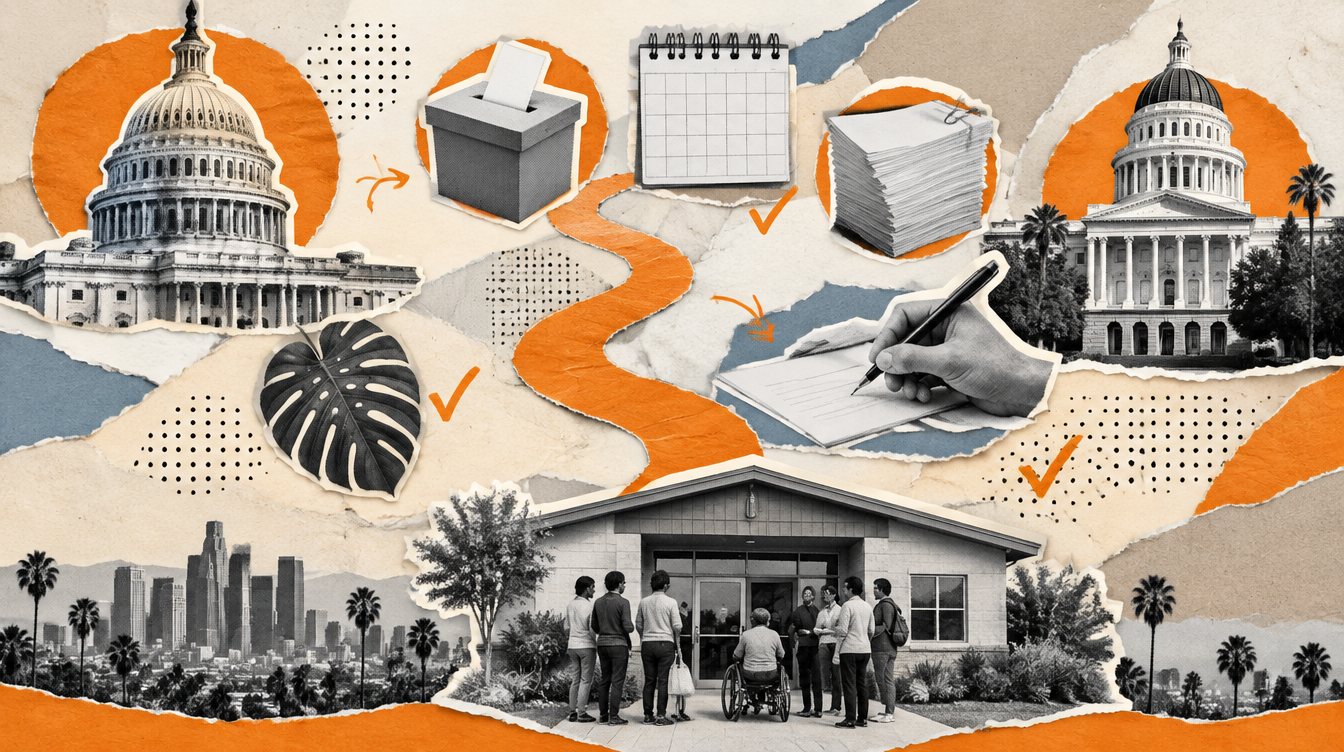
Democrats won control of both the U.S. House and Senate in Tuesday's midterm elections, according to the Associated Press. In California, Democrat Xavier Becerra defeated Republican Steve Hilton to become the state's next governor, succeeding Gavin Newsom in January.
If you work in or around nonprofits, you're probably asking one question this morning: Will this mean more jobs?
The short answer: It could help stabilize the funding environment, but don't expect an immediate hiring boom.
The election changes the political balance in Washington. It does not automatically restore lost grants, reverse existing funding decisions, or put new money into nonprofit budgets. For Southern California organizations, the next year will depend on what happens with federal appropriations, state finances, and county contracts.
There are reasons for cautious optimism, but also reasons to remain careful.
What changes in Washington, and what doesn't
Democrats will enter 2027 with control of both chambers of Congress for the first time in Trump's second term. That gives them greater influence over federal spending decisions and the ability to investigate how the administration has handled federal grants.
What changes
Democrats will control congressional committees and have greater influence over the annual appropriations process. They can challenge proposed cuts, scrutinize grant cancellations and funding freezes, and use oversight hearings to question federal agencies about their decisions.
They can also push legislation to protect or restore programs that have been affected by the administration's policies.
One immediate example involves proposed changes to federal grant regulations.
In May, the Office of Management and Budget (OMB) proposed revisions to the federal Uniform Guidance, which governs how federal grants are administered. The proposal included changes affecting grant oversight, agency priorities, and the circumstances under which federal awards could be suspended or terminated.
The current federal spending agreement actually prohibits this proposed rule, or a substantially similar rule, from being issued or finalized through December 11.
A Democratic Congress could further scrutinize these changes when it takes office.
What doesn't change
President Trump remains in office and retains his veto power. Democrats do not have the two-thirds majorities needed to override a presidential veto.
That means major disagreements over federal spending could lead to legislative gridlock.
The new Congress can make it harder to advance certain cuts and can increase pressure on federal agencies, but it cannot guarantee that existing funding will be restored or that nonprofit organizations will receive new grants.
The most immediate priority is the federal budget.
The government is currently operating under a temporary spending agreement that expires December 11. Congress must pass another temporary measure or full-year appropriations before then to avoid a funding lapse.
That deadline comes before the new Congress takes office in January, making the outgoing Congress's remaining weeks particularly important.
When could nonprofit hiring improve?
Federal budget decisions don't translate directly into new nonprofit jobs.
Even when Congress protects a program's funding, organizations still need to receive grant awards, finalize budgets, and determine whether they can afford to hire.
Here's a general timeline to watch:
- December 11, 2026: The current federal spending agreement expires. Congress must extend funding or enact full-year appropriations to avoid a potential government shutdown.
- January 2027: The new Congress takes office, and Xavier Becerra becomes California governor.
- Early to mid-2027: Federal agencies continue working through funding decisions, grant awards, and program implementation. The timing will vary by agency and program.
- Mid to late 2027: Some nonprofits may begin adjusting staffing plans as funding becomes clearer. Organizations with restored, renewed, or expanded contracts could reopen frozen positions or add staff.
There is already evidence that funding uncertainty has affected nonprofits.
A 2026 Instrumentl survey of more than 300 grant-managing nonprofits found that 47% had lost federal, state, or local grant funding. Among affected organizations, 80% were diversifying into private and corporate grants to fill funding gaps.
That matters because funding losses don't always result in immediate layoffs. Organizations may first freeze vacancies, delay expansion, reduce hours, or leave positions unfilled.
If funding becomes more predictable, some of those positions could return. But that recovery will depend on the organization, the funding source, and whether the money actually reaches its budget.
The second half of 2027 is a reasonable period to watch for potential improvement, not a guaranteed hiring rebound.
Which nonprofits could be most affected?
The organizations most exposed to changes in federal and state funding are generally those that depend heavily on government grants and contracts.
For Southern California, several areas deserve particular attention.
Health and community clinics
Community health centers and other healthcare nonprofits depend on a combination of federal grants, Medi-Cal reimbursements, and other public funding. Changes to federal healthcare policy and state reimbursement programs can affect staffing decisions across clinical, administrative, and community health positions.
Housing and homelessness services
Housing providers, homeless service organizations, and supportive housing programs often depend on federal grants administered through state and local governments. County contracts also play a major role in determining how many staff organizations can afford to employ.
In Los Angeles County, changes in homelessness funding and the transition of responsibilities between agencies and service providers make this an especially important area to watch.
Workforce development
Job training, employment services, and career development programs frequently depend on federal workforce funding and state or county contracts. Funding changes can affect everything from program coordinators and case managers to employment specialists and administrative staff.
Education and youth programs
Early childhood education, after-school programs, college access organizations, and youth development nonprofits often combine government grants with foundation and individual contributions.
Changes in education funding can affect program capacity and the ability to maintain staff.
Arts, media, and cultural organizations
These organizations have also experienced significant federal funding disruptions. The Corporation for Public Broadcasting, for example, announced its dissolution in January 2026 after Congress rescinded its federal funding.
A new congressional majority can investigate previous funding decisions and propose new appropriations, but restoring an organization that has dissolved is a much more complicated undertaking.
For job seekers, one important consideration is understanding how an organization is funded. An annual report or IRS Form 990 can provide insight into its revenue sources and financial position.
Organizations with a mix of government contracts, foundation support, individual donations, and earned revenue may have more flexibility when one funding source becomes uncertain. Diversification, however, does not automatically mean financial stability.
The California and Southern California picture
Washington is only part of the equation.
For nonprofits across Southern California's 10 counties, Sacramento and county government budgets can be just as important as federal spending decisions.
Federal money frequently reaches local organizations through state and county agencies. At the same time, many nonprofits operate directly through state contracts, county agreements, and locally funded programs.
That creates a complicated outlook for 2027.
Xavier Becerra will take office in January and inherit a state budget facing significant structural challenges.
In its November 2025 fiscal outlook, California's nonpartisan Legislative Analyst's Office projected that the state could face structural deficits of approximately $35 billion annually beginning in 2027-28.
The LAO also identified an approximately $18 billion budget problem for 2026-27.
These projections are important because they suggest California will have limited flexibility to expand services or replace federal funding losses without making difficult budget decisions.
Becerra's first budget will be an important early indicator of how his administration intends to manage these competing pressures.
For nonprofit organizations, the result could be a split funding environment: greater congressional resistance to additional federal cuts, but continued pressure on California's ability to finance its own programs and contracts.
That distinction matters.
A nonprofit may see its federal grant outlook improve while simultaneously facing uncertainty about a state or county contract.
For organizations in health and human services, housing, education, and workforce development, both sides of the funding equation will matter.
What this means for nonprofit job seekers
The election is an important development, but it isn't a reason to put your job search on hold or assume that nonprofit hiring will suddenly accelerate.
Here are four things worth doing now:
1. Keep applying.
Nonprofits are still hiring. Organizations supported by foundations, individual donors, corporate partnerships, and earned revenue may be less directly exposed to federal funding changes.
Don't assume every nonprofit is experiencing the same financial pressures.
2. Understand how a position is funded.
During an interview, ask whether the position is supported by an ongoing operating budget, a government contract, or a specific grant.
If it's grant-funded, ask when the grant expires and whether renewal is expected.
These are reasonable questions, particularly for positions in programs that depend heavily on public funding.
3. Watch for organizations reopening frozen positions.
If an organization eliminated or postponed hiring earlier in 2026, a new posting in 2027 could indicate that its funding situation has improved.
Pay attention to employers that consistently hire across multiple departments. That may provide a better indication of organizational stability than a single job opening.
4. Follow hiring trends, not just political headlines.
Funding announcements are important, but actual hiring activity tells us whether organizations are expanding, maintaining staffing levels, or pulling back.
Watch job postings across different nonprofit fields and counties to see where demand is changing.
What this means for nonprofit employers
Nonprofit employers should prepare for an uneven funding environment rather than assume that political changes will immediately improve their financial position.
A few priorities deserve attention:
- Plan around multiple funding scenarios. Consider what happens if federal funding stabilizes, remains uncertain, or declines further.
- Identify critical staffing needs. Keep a list of positions that could be reopened if new funding becomes available.
- Diversify revenue where possible. Organizations overly dependent on one government contract or grant may be particularly vulnerable.
- Communicate honestly with candidates. Be transparent about grant-funded positions, contract renewals, and the financial outlook for the role.
Organizations that understand their funding exposure and plan ahead will be better positioned to compete for talent when hiring opportunities emerge.
The bigger question: What will nonprofit hiring actually look like in 2027?
The 2026 midterms changed the political environment, but the impact on nonprofit employment will take longer to understand.
The next several months will tell us whether federal funding becomes more predictable, whether California can maintain its commitments to public services, and whether local governments can sustain the contracts that support thousands of nonprofit jobs.
For Southern California job seekers, the opportunity may come gradually rather than all at once.
At SoCal Nonprofit Jobs, we'll be watching what happens beyond Washington: which organizations are posting jobs, which sectors are expanding, where hiring is slowing, and how demand differs across our 10-county region.
Because ultimately, the most important measure isn't what politicians promise or what funding bills say.
It's whether nonprofit organizations have the resources to hire people and deliver the services their communities need.
Sources and further reading
- Democrats usher in a new era with their resounding sweep of the House and Senate, Associated Press, November 4, 2026.
- Xavier Becerra wins California governor's race, KQED, November 3, 2026.
- Overview of Continuing Appropriations for FY2027, Congressional Research Service, September 17, 2026.
- May 2026 Proposed Rule on Uniform Guidance for Federal Grants, Congressional Research Service, updated September 11, 2026.
- The New Funding Rush: How Nonprofits Are Racing to Adapt Amid Federal Grant Changes, Instrumentl, 2026.
- California's Fiscal Outlook, Legislative Analyst's Office, November 19, 2025.
- Labor, Health and Human Services, and Education: FY2026 Appropriations, Congressional Research Service, May 28, 2026.